by Steve | Dec 27, 2012 | Bookbinding, Scrap Books |
I’ve written in the past about what I affectionately call Scrapbooks. If you missed that posting in the past, Scrapbooks are books that I bind from the scrap material that is left over from other projects and generally, they tend to be on the small side. A few days ago, I found a long, skinny piece of red oak that was about 3″ X 24″. My first impulse was to cut it up into several pieces and make three of four scrapbooks, but then I stopped and thought about making a book that was long and skinny instead.
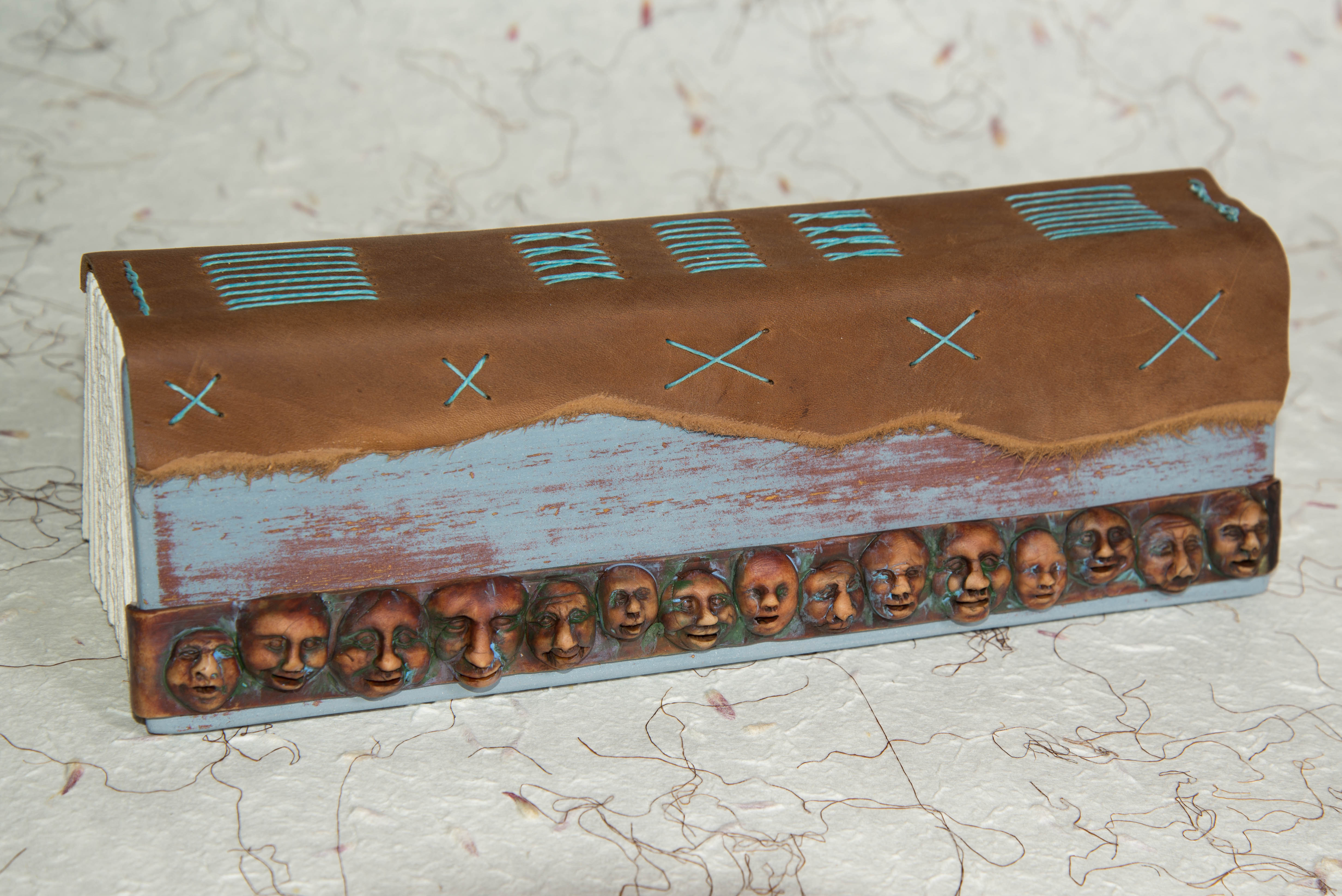
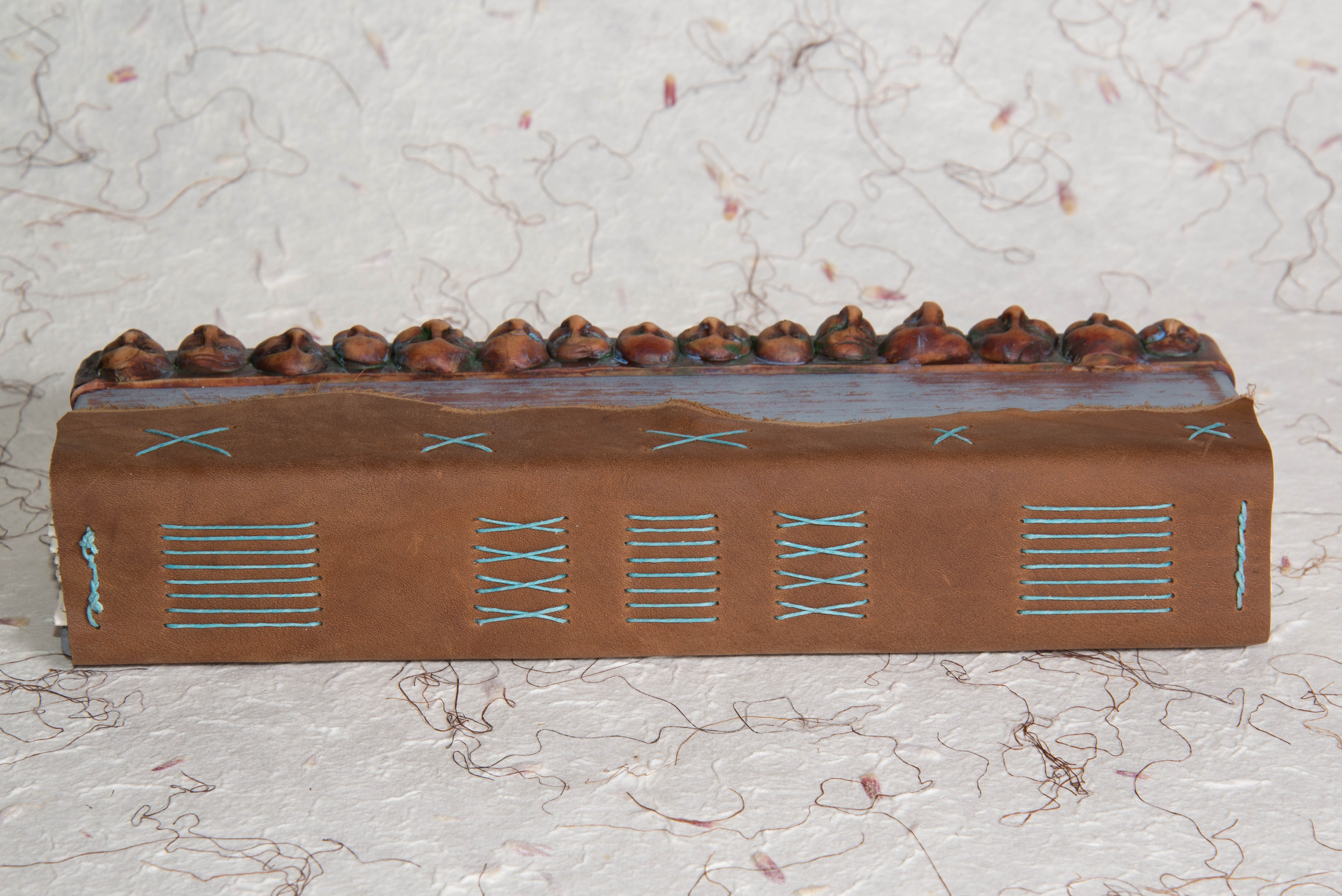
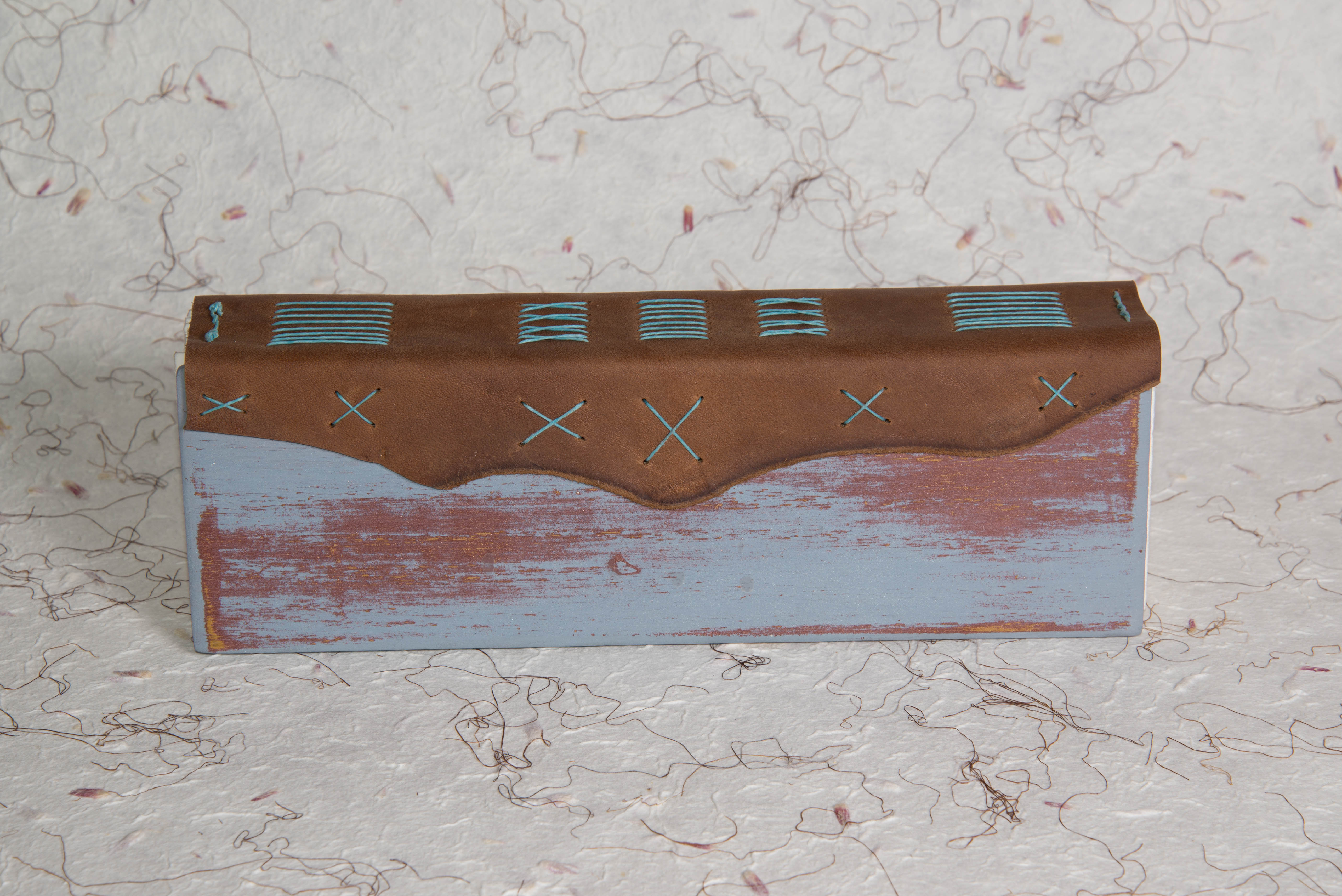
I finished the covers with several coats of milk paint in several different colors, and then create a distressed finish by sanding through the paint. After I finished the covers, I felt that they needed something more, so I made a band of polymer clay faces to attach to the cover to give it a more dimensional feel. Eight signatures of 200gm Artistico Fabriano watercolor paper were sewn to a leather spine with 4-ply Irish Linen thread which was then sewn to the covers. Here are some images of the finished journal, you can click on the images to view them in more detail.
Long and Skinny, Front View
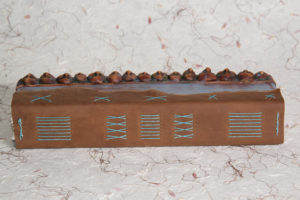
Long and Skinny, Sewing Detail
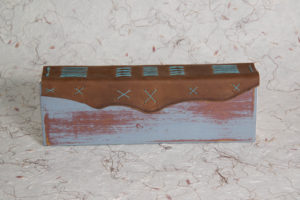
Long and Skinny, Back View
by Steve | Jan 20, 2011 | Bookbinding |
Like many others who keep an art journal, I tend to work in several at a time. One is usually a larger book I’ve bound, think of it as the mothership — it rarely leaves the house. Each year around this time I bind a new one to take me through the year,
I began by tearing down 10 sheets of Fabriano Artistico to for the book block, I didn’t want any waste so I quartered the sheets for a book block that measured 7 1/2″ X 11″. I wanted the cover to look like it had been made from some salvaged wood so I began by edge gluing some poplar to a strip of walnut to get the 7 1/2″ width I was going to need.

Once the glue was dry, I ripped the board down to 7 1/2″ and then cut it down into to 11″ pieces.

Because I wanted this to look like reclaimed wood id decided to use several coats of milk paint. Milk paint can provide a nice hard, smooth finish but you can manipulate it to look distressed by applying it too quickly which can cause it to crack. I started with a base coat of black and followed that up with a two coats of white.

My goal was to get some hairline cracking of the white paint to reveal the black underneath, there wasn’t as much cracking as I had hoped but it was good enough for what I had in mind. I sanded the white coat a little and then applied a mask to create some lettering under the final coat of paint.

Once the paint was dry I sanded it down until I cut through the layers of paint and looked well worn. I followed that up with a couple of coats of clear Danish Oil to protect the finish. Once the covers were done, I attached them to the book block to wrap it up. Here’s a shot of the finished book, 424.